
Providence College Students Explore the Early Universe with the James Webb Space Telescope
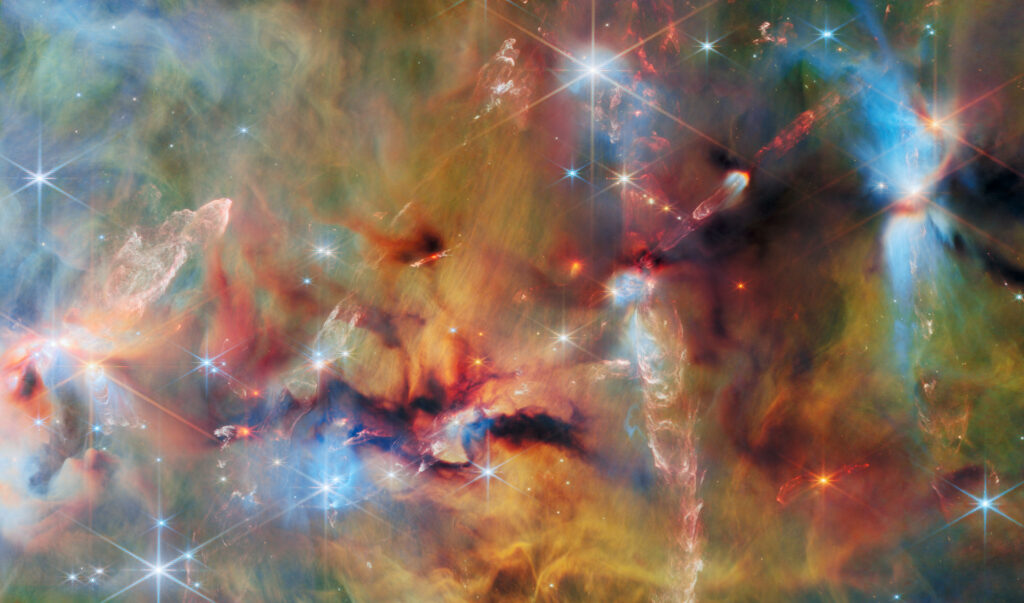
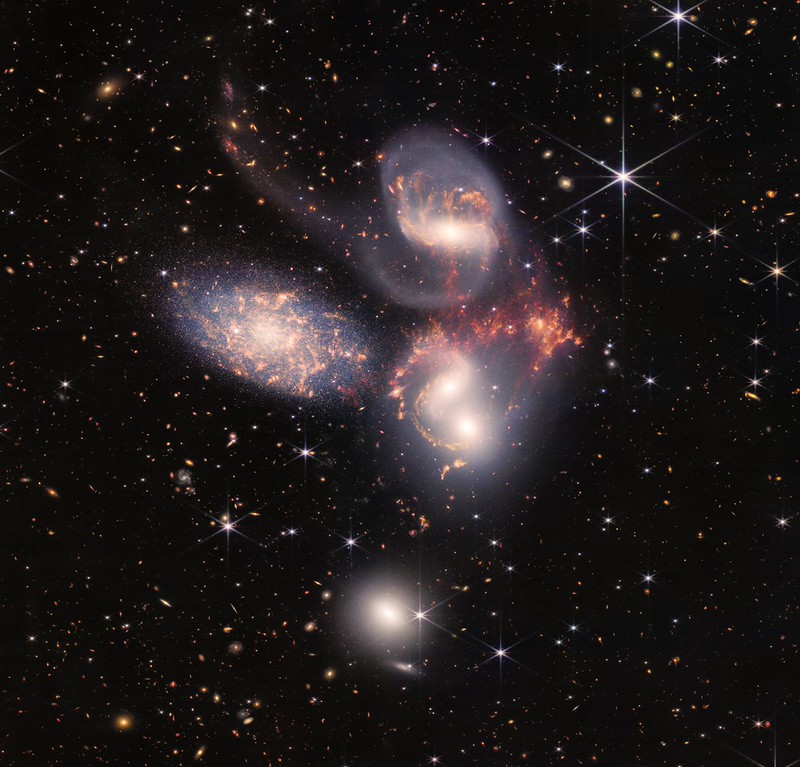
The Department of Engineering and Physics is home to the OCEANS survey, a 70-hour observing program on the James Webb Space Telescope led by Prof. Raymond Simons. The program targets hundreds of galaxies in the distant universe, capturing light that was emitted more than 12 billion years ago, when the universe was only 5% of its current age. OCEANS is among the deepest spectroscopic surveys ever carried out at these distances.
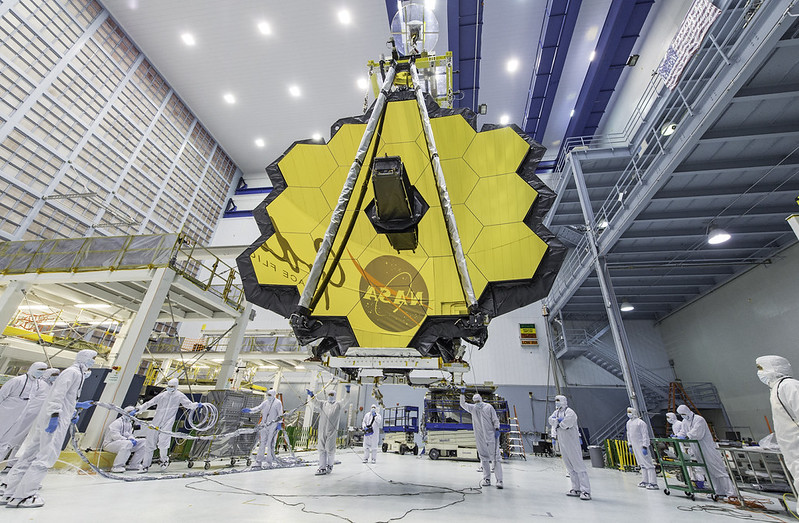
The observations use JWST’s NIRSpec instrument, which places small configurable shutters, each about the width of a human hair, over individual galaxies and disperses their light into spectra. A spectrum encodes a galaxy’s distance, its chemical composition, the motions of its gas, and the presence of winds flowing into intergalactic space.

With these measurements, OCEANS is addressing a central question in galaxy evolution: how galaxies like the Milky Way, an orderly rotating disk today, emerged from the turbulent and clumpy systems that populated the early universe. The program traces the internal motions of gas in galaxies across cosmic time to establish when and how that transformation took place. Related science goals include measuring galactic winds, mapping the dust that obscures star formation, and characterizing “Little Red Dots,” a recently identified class of compact red sources that may host growing supermassive black holes.
The data are processed and analyzed at Providence College, and undergraduates play a key role in the survey. Students in the group write Python code to calibrate spectra, fit emission lines, and measure galaxy rotation, contributing to analysis tools used across the collaboration. The work builds real skills in scientific programming, statistics, and handling large datasets, and it puts students in front of galaxies that no one has studied before.
Students interested in astrophysics, data science, or scientific computing are encouraged to get involved. No prior research experience is required. Contact Prof. Simons (rcsimons@providence.edu) to learn more about OCEANS, what the program is uncovering about the early universe, and how you can join the team.